
Published by Vince Baker Ministries · Informed by the book by Vince Baker and Sergie Atams ·
Read the Scriptures
Why the borrowed axe mattered
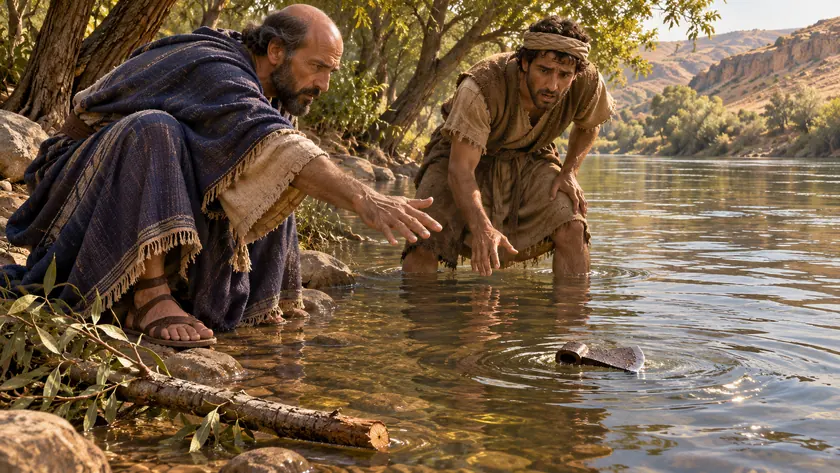
The sons of the prophets needed more room, so they asked Elisha to accompany them to the Jordan to gather timber. As one of them cut a beam, the iron axe head fell into the river. The man’s first words explain his distress. The tool was borrowed, and he would have to answer for its loss.
That detail helps explain why the incident mattered to the group. They were building something together, and an accident had created a responsibility for one of them. Elisha stayed with the man long enough to ask where the axe head had fallen.
What Elisha did at the Jordan
The man showed Elisha the place. Elisha cut a stick, threw it there, and the iron came to the surface. He told the man to pick it up, and the man reached out and took it. Read those actions in order and notice who did what. The borrower identified the spot and retrieved the tool after it surfaced.
Some readers see symbolism in the stick. The passage itself gives no explanation of what the wood represents. Its focus is the recovery of the iron and the man’s response. That makes it possible to teach the story clearly before discussing any devotional parallels.
How this miracle fits Elisha’s ministry
The Jordan is also where Elisha returned with Elijah’s mantle in 2 Kings 2:13–15. There, the crossing confirmed his succession in front of the prophets. Here, during a building project, those associated with prophetic ministry see him help someone recover a borrowed tool. The setting is familiar, but the need is different.
That change in scale is worth noticing. The same book records Elisha ministering during public crises and attending to ordinary needs. Readers studying Elijah’s mantle can see what the responsibility looked like in practice: Elisha accompanied people, listened to their problem, and acted in the situation before him.
A question for your Bible study group
What do you learn from the man’s willingness to say immediately that the axe was borrowed? Discuss how honesty helps a community respond well when something goes wrong. Then compare the two Jordan accounts and ask what each one shows about Elisha’s responsibility toward the people he served.